



Which Petrol Water Blaster Is Best? Let’s Find Out
If you rely on a petrol water blaster for paid work, the “best” machine rarely means the most expensive model. It means the unit that suits your jobs runs consistently and helps you finish on time without lowering your standards. When a machine falls short, you feel it straight away through slower wash-downs, patchy results, and avoidable call-backs.
Petrol units suit teams who move between sites, work in areas with limited power access, and need steady performance across different surfaces. With the right setup, you protect your time, reduce downtime, and deliver a cleaner finish that keeps customers confident in your work.
In this guide, we cover common types and practical uses, then share two options we supply at Pressure Solutions Ltd, with clear reasons why each one suits certain workloads.
Types of Petrol Water Blasters
Petrol water blasters come in a few common formats, and each one supports a different style of work. Your best match depends on how you travel, how often you blast, and how hard you push the unit each week.
Portable Frame-Mounted Units
These often suit tradies and mobile operators who lift gear on and off a ute. They typically feel easier to transport, and they cover many day-to-day cleaning jobs without a large footprint.
Skid-Mounted Setups
These suit vehicles or trailers where the unit stays mounted most of the time. Because the setup stays in place, it often suits repeat work where you want faster arrival, simpler hose management, and steadier operation.
Trailer-Mounted Water Blasters
These suit larger jobs and frequent use, especially when you need a complete setup that moves easily between sites. Many businesses choose a trailer solution when the workload grows and site time becomes the main cost.
Cold Water vs Hot Water Systems
Cold water suits most general cleaning, especially when you pair it with the right nozzle and surface cleaner. Hot water can suit grease, oil, and heavy build-up, where heat supports faster breakdown of stubborn grime.
If you feel unsure, start by thinking about what causes delays on site. Some crews lose time because rinse speed feels slow, which points to flow. Others lose time because grime holds on, which points to pressure, technique, and nozzle choice.
Uses of Petrol Water Blasters
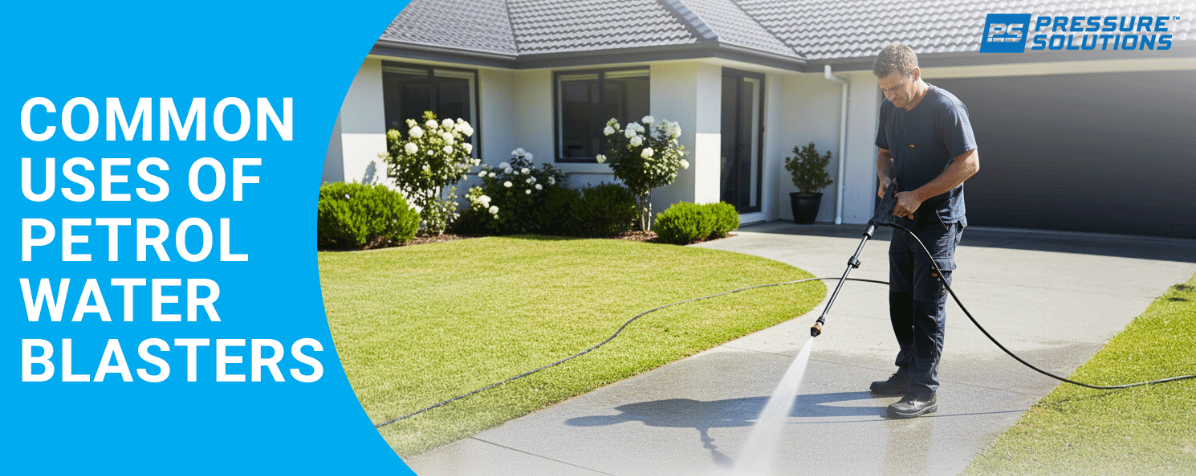
A petrol setup can suit residential, commercial, and rural work, but the “best” choice still depends on what you clean and how often you work. A machine that feels perfect on one site can feel slow or awkward on the next.
Here are common jobs where petrol setups tend to earn their keep:
- Driveways, paths, patios, and exterior tiles
- Building wash-downs and façade cleaning
- Farm yards, rural equipment, and heavy outdoor mess
- Commercial work where mobility matters across sites
- Jobs where power access is limited or unreliable
As a quick reality check, think about your last few jobs. If you had to return because the finish looked uneven, you may need better control, better accessories, or a change in technique. If you finished well but finished late, you may need more output that matches the area size.
How to Choose the Right Petrol Water Blaster for Your Work
This is the section many people wish they read earlier, because it saves money and avoids the wrong purchase. The right choice comes from how the machine performs in your most common jobs, not from a spec sheet alone.
Start with surface type and job size. A small patio clean needs control more than raw output, while a large commercial rinse needs speed and consistent delivery. Next, look at how often you run the unit. If you blast most days, build quality and service support matter as much as pressure.
It also helps to separate pressure and flow in your own mind. Pressure helps lift stubborn dirt, while flow helps clear it away and rinse faster. In real work, nozzle choice and technique often decide the finish, so ask what accessories suit your work before you commit.
If you want a practical test, picture a wet winter week. You arrive on a site where the concrete stays damp, the grime holds tight, and time runs short. The right machine should still feel predictable, not temperamental.
Best Suited Petrol Water Blasters for Your Business
There is no single “best” petrol water blaster for every business. The right option depends on your cleaning requirements, your expected workload, and the finish you need to deliver. Engine choice, flow rate, and overall build quality also matter, especially when you rely on your equipment every week.
Below are two petrol water blasters we supply that suit a wide range of cleaning tasks.
COMBO-PLUS 3.5G25 High-Pressure Cleaner
The COMBO-PLUS 3.5G25 High-Pressure Cleaner is a strong option for varied work. It uses a GX200 Honda engine, which is well known for reliable performance. This unit suits businesses that need a solid, practical water blaster that can handle general cleaning without feeling bulky.
It can suit jobs such as:
- Residential exterior cleaning
- Patios, paths, and small commercial areas
- Regular maintenance work where you need steady output
If you want a petrol unit that covers many day-to-day tasks, this is often a good starting point.
MAGNUS 5.5G40 Cold Water High-Pressure Cleaner
The MAGNUS 5.5G40 Cold Water High-Pressure Cleaner is built for a stronger demand. It comes with a 15HP Rato engine and a flow rate of 3000/21. This unit suits users who need a cold water blaster that handles residential and commercial work with more power behind it.
It can suit jobs such as:
- Larger wash-down tasks and repeat commercial work
- Bigger surface areas where speed and output matter
- Businesses that want durable equipment at a practical price point
If you are unsure whether this unit fits your workload, our team can advise on specifications and what they mean for your type of work.
Total Ownership Cost: Fuel, Maintenance, and Downtime
The purchase price is only one part of the story, and most operators learn this after a few months of steady use. A petrol water blaster that saves time on every job can cost less overall than a cheaper unit that needs frequent repairs or slows the job down.
Fuel use adds up when you run long hours, so efficiency matters. Wear items also matter, such as hoses, nozzles, and fittings, because they take a beating in real work. Maintenance tends to stay simple when you keep the machine clean, store it well, and follow a sensible service routine.
Downtime is the cost that hurts most. One delayed job can cause a chain reaction through the week, especially when weather windows stay tight. When you choose a unit that suits your workload, you reduce the chance of last-minute stress and rushed results.
Your Next Step: Match the Machine to the Job
The best choice is the one that matches your job type, your budget, and how often you use the equipment. A reliable machine helps you clean faster, achieve a consistent finish, and avoid downtime. That matters whether you work solo or you manage a crew.
If you want help choosing the right setup, Pressure Solutions Ltd supplies petrol, diesel, electric, and hot water solutions across New Zealand. We can talk through your sites, your workload, and the finish you want to deliver, then recommend a setup that suits your work.
FAQs
1. What is the difference between a commercial and an industrial water blaster?
People use these terms in different ways, so the most useful approach is to match the machine to the job size and frequency. A unit that suits occasional work may struggle under daily commercial use, while industrial setups often suit heavier repeat workloads.
2. Do you sell commercial water blasters in NZ?
Yes. We supply commercial and industrial water blasters across New Zealand, and we can advise on a setup that fits your work, from mobile units through to larger mounted solutions.
3. Which machine suits my business best?
Start with what you clean most often, how large the areas are, and how frequently you work. Then consider output, durability, and service support, because the right balance often matters more than peak numbers.
Which Petrol Water Blaster Is Best?
The “best” machine is the one that suits your jobs, runs reliably, and supports consistent results under real site pressure. If you choose a petrol water blaster that matches your workload, you usually gain faster job times, fewer call-backs, and less downtime across the month. That is what most operators really want when they invest in equipment for work.


