



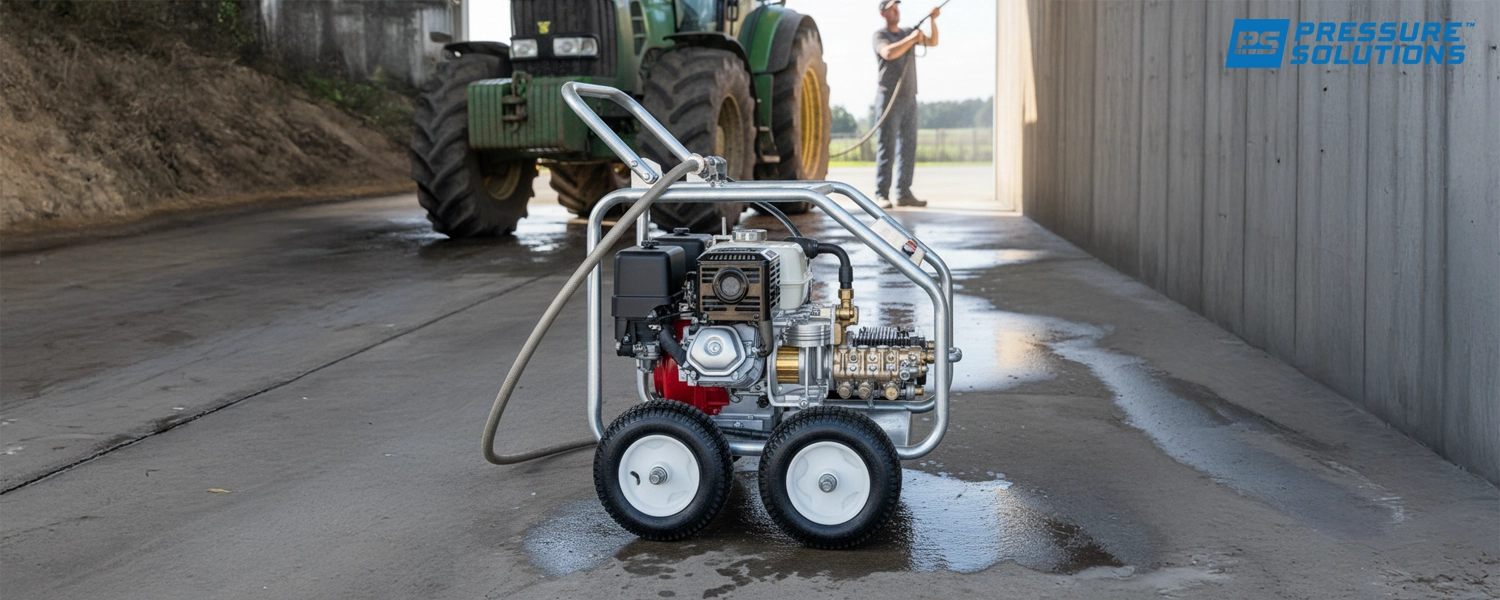
High-Pressure Pumps: How to Choose the Right Pump for Your Water Blaster
You can have a strong frame, a reliable motor, and a top-quality hose, but if your high-pressure pumps fail, the whole machine stops working. Many people learn this the hard way. You might be halfway through washing a tractor, cleaning a workshop floor, or stripping paint from a fence when the pressure suddenly drops, the pump starts making noise, and the job comes to a halt.
At Pressure Solutions, we see this happen every week. The pump is the core of a water blaster. If it is chosen carefully and maintained, your work is smoother, faster, and safer. If it is not right for the job, you end up wasting time and money on repairs.
This guide explains the different pump types, drive options, the balance between PSI and flow, and how to pick a pump that works well in New Zealand.
Why the Pump Matters More Than Anything Else
It is tempting to focus on the headline numbers. People often ask about pressure first, then brands, then price. Yet the pump is what turns an engine into usable cleaning power. It takes water from the source, compresses it, and delivers it at a controlled rate that your nozzle can handle. If that compression stage is weak, worn, or mismatched, the rest of your setup cannot compensate for it.
Here is what we usually see when the pump has been treated as an afterthought:
- The machine looks fine, but the pressure drops after a few minutes because the pump overheats.
- Seals fail early because the pump is spinning too fast for the duty cycle.
- Users chase more pressure by swapping nozzles, then overload the pump and crack valves.
- The unit gets parked in the shed because it feels unreliable, even though the motor still runs.
Choosing the right pump helps you avoid these problems. It also saves you stress when you have a lot of work and cannot afford delays.
Understanding Pump Mechanics: Axial vs Triplex Plunger Pumps
People often want to know which pump type to buy, and the answer depends on how you plan to use your water blaster. Most water blasters use either axial cam pumps or triplex plunger pumps. Both create water pressure, but they work differently and have very different service lives.
Axial Cam Pumps (The DIY Choice)
Axial pumps are usually direct drive, meaning they attach directly to the motor shaft and spin at full engine speed, often around 3,400 RPM. This lets them deliver pressure quickly and keeps the system compact. They are also cheaper to make, so many entry-level machines use axial pumps.
In real terms, axial pumps are best suited for intermittent use. Think of washing the car on a Saturday morning, rinsing a small boat, or blasting the deck now and then. They handle short runs well, and they are easy to replace when they finally wear out.
The downside is more heat and wear. High RPMs increase friction, so these pumps are not good for long sessions or hot-water jobs. If you use one for hours at a time, the seals and valves often wear out sooner than expected.
Triplex Plunger Pumps (The Industrial Standard)
Triplex pumps use a crankshaft and three plungers to move water in a smoother, cooler cycle. They usually run at lower RPM, even with powerful engines, because the drive system can slow them down. This slower movement is the main reason they last longer.
Triplex pumps are made for regular, long-term use. If you clean farm equipment often, run a contract washing business, or need an industrial unit, this type will last. It also handles higher pressures without putting as much stress on parts as an axial pump.
People sometimes ask, “What type of pump is best for a pressure washer?” For most serious or frequent users, a triplex plunger pump is the better long-term choice because it runs cooler, is easier to service, and handles bigger jobs.
The Performance Equation: Balancing PSI and Flow (LPM)
High-Pressure pump numbers are only part of the story. Many customers want the highest PSI, believing that higher pressure always means better cleaning. It is not that simple. Cleaning power depends on both PSI and flow, which is measured in litres per minute (LPM).
- PSI (pounds per square inch) is your cutting or stripping force. It breaks bonds, lifts paint, and blasts grease off hard surfaces.
- LPM (litres per minute) is your rinsing and carrying force. It clears mud, moves slurry, and washes away what you have loosened.
If you only increase PSI without enough flow, you get a sharp jet that may cut dirt but takes ages to rinse. If you only increase flow without enough PSI, you wash loose grime well but struggle with baked-on material.
Here is a simple way to look at it. A farmer cleaning tractors after rain usually needs a high flow to move thick mud quickly. A contractor removing graffiti often needs high PSI to lift paint from concrete or brick.
People also ask, what PSI is good for a water blaster? For home use, you often sit around 1,800 to 3,000 PSI. For commercial work, you may move into the 3,000 to 4,000 PSI range, or higher for specialist jobs. The “good” PSI is the one that matches your surface and flow needs, not a number chosen in isolation.
Drive Types: Direct Drive vs Gearbox vs Belt Drive
After you choose your pump type, the next thing to consider is how it is driven. The drive method affects speed, heat, and wear, all of which impact how long the pump lasts.
Direct Drive
Direct drive means the pump runs at the same RPM as the motor. This keeps the unit small and simple, making it suitable for lighter duties. It is common on axial-pump machines and on some smaller triplex units.
The downside is speed. If the motor runs at 3,400 RPM, so does the pump. This increases heat and wears out seals faster during heavy use. With direct drive, you need to be realistic about how much you use the machine. If you only use it in short bursts, it can work well. If you plan to use it all day, it will wear out sooner.
Gearbox or Belt Drive
Gearbox and belt drives lower the pump’s RPM, often to around 1,450 RPM. This makes a big difference in pump stress. At lower speeds, the pump stays cooler, the oil lasts longer, and the valves close more gently.
This lower RPM is one reason industrial pumps, such as many Hawk models, last so long under tough conditions. The system might be bigger and cost more at first, but for regular users, the extra durability means fewer repairs and less downtime.
If you have used a blaster for a long cleaning job and noticed it losing power as it gets hot, the drive type is often the reason.
Matching the Pump to the Power Source
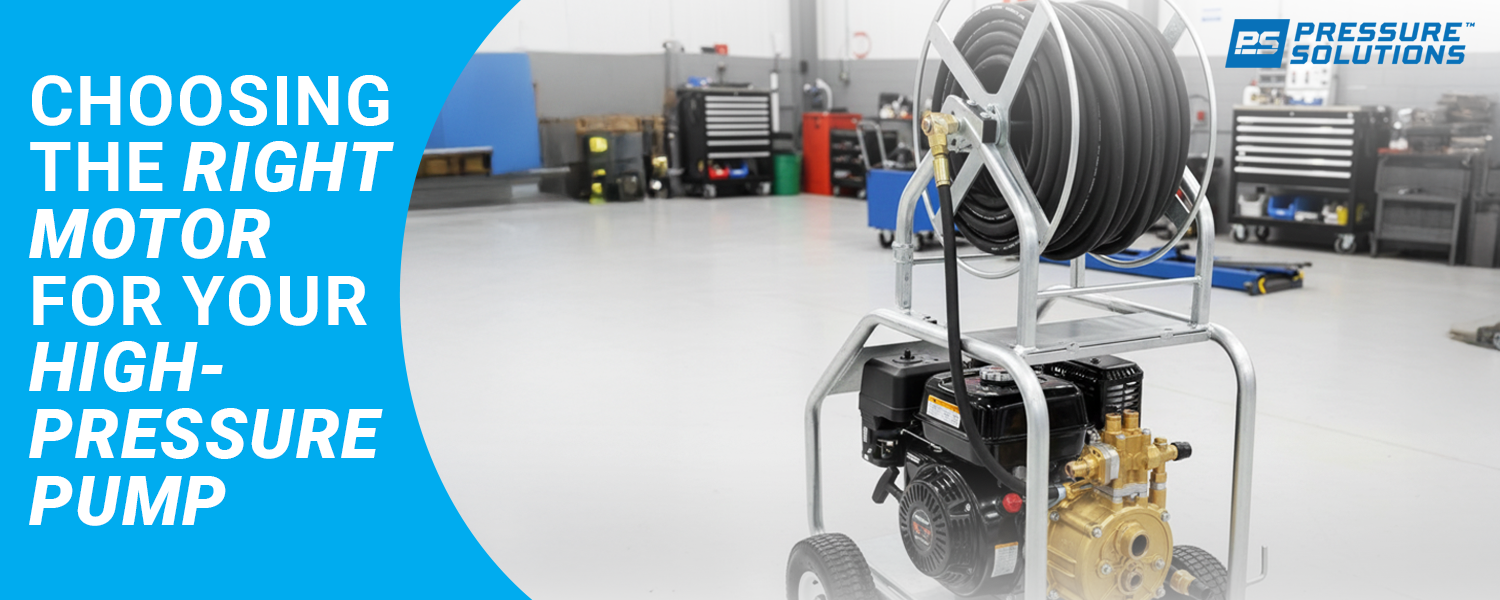
We often hear from people who want more pressure from a machine that already seems strong. They think they can just add a bigger pump. In reality, the pump’s performance depends on the motor. If your engine cannot provide enough horsepower for a larger pump, the system will slow down, overheat, and break down early.
That is why we always match pumps and motors together. You need enough horsepower to reach your target PSI and LPM at the right RPM.
A common question is: What type of pump is best for increasing water pressure? The truth is, a pump alone will not increase pressure if the motor cannot handle it. Often, the best solution is to upgrade the entire setup or adjust the nozzle and flow to fit your current machine.
If you are not sure, bring your machine details to us. We can check the motor rating, the pump plate, and your nozzle size, then let you know what is possible.
Top Brands We Trust in NZ Conditions
New Zealand work sites are tough on pumps. Coastal salt, fine dust, long farm wash-downs, and cold starts all put seals and bearings to the test. Over time, we have seen which brands handle these conditions best.
Hawk Pumps
Hawk pumps are made for heavy use. We often suggest them for machines that run for long periods or need high pressure and flow every day. Their crankshaft design and high-quality parts make them ideal for tough industrial work, especially when used with a gearbox or belt drive.
Interpump and General Pump
Interpump and General Pump models are versatile and reliable. They fit many New Zealand water blaster setups, from mobile trailers to skid units. Parts are easy to find, which is important when you need a seal kit quickly to keep working.
AR (Annovi Reverberi)
AR pumps are a good middle option. They give strong performance for the price and are a good choice for many commercial users who want reliable results without moving up to the most heavy-duty models.
We stock parts and offer service for these brands because we know they work well in local conditions and handle local workloads.
How to Choose the Right Pump for Your Job
By now, you can see there is no single “best” pump for everyone. The right pump depends on what you clean, how often you do it, and how long each session lasts.
As a quick guide:
- If you use your blaster occasionally around the home, an axial direct-drive unit can suit you, as long as you accept that it is built for light duty.
- If you clean machinery, fleets, or buildings regularly, a triplex plunger pump with reduced RPM will give you far better life.
- If rinsing speed matters more than stripping power, prioritise LPM over PSI.
- If stripping or surface prep is the main task, prioritise PSI, but stay within the surface limits.
We also remind people to think about service. A pump that is easy to rebuild and has local parts support is often a smarter choice than one with a flashy spec sheet but no backup.
Maintenance Habits That Protect Your Pump
Even the right pump fails early if it is treated poorly. Most breakdowns we see come from a few avoidable habits.
Flush clean water through the machine after use, especially if you have worked around salt, sand, or chemical solutions. Check the oil level and colour on triplex pumps. Foamy or milky oil usually indicates that water has entered the crankcase, and seals need attention.
Do not let the unit idle in bypass for long periods, because water heats inside the pump head. If you need a break, shut down and restart. Also, store the blaster out of frost. Ice expansion cracks manifolds quickly.
These steps sound basic, yet they add years to pump life.
Choosing High-Pressure Pumps With Confidence
A water blaster is only as reliable as its pump. When you choose high-pressure pumps that match your workload, your motor, and your cleaning goals, you get steady power and fewer breakdowns. Axial pumps work for light, short tasks. Triplex plunger pumps are suitable for regular or industrial use. PSI and LPM need to be balanced, and the drive type often decides how long a pump lasts. Brands like Hawk, Interpump, General Pump, and AR have proved themselves in New Zealand, and we keep parts and service support for them because downtime costs money.
If you are weighing options, talk with us before you buy. We will help you pick high-pressure pumps that fit the job you actually need to do, not a number on a box.
FAQs
How do I increase the pressure on my pressure washer?
Start with the basics. Check your nozzle size and condition, because worn nozzles drop pressure. Make sure your water supply is strong, and your filters are clean. If the pump is worn, a rebuild may restore pressure. If you want a real increase, the motor and pump must be upgraded together.
What type of pump is best for a pressure washer?
For regular or heavy use, triplex plunger pumps are the better long-term choice. They run cooler, last longer, and are easier to rebuild. Axial pumps suit light, occasional home use.
Can I upgrade my pump to increase water pressure?
Sometimes, but only within the limits of your motor. A larger pump needs more horsepower. If the motor cannot supply it, you risk poor performance and early failure. We can check your setup and explain what upgrades make sense.


